



In This Episode
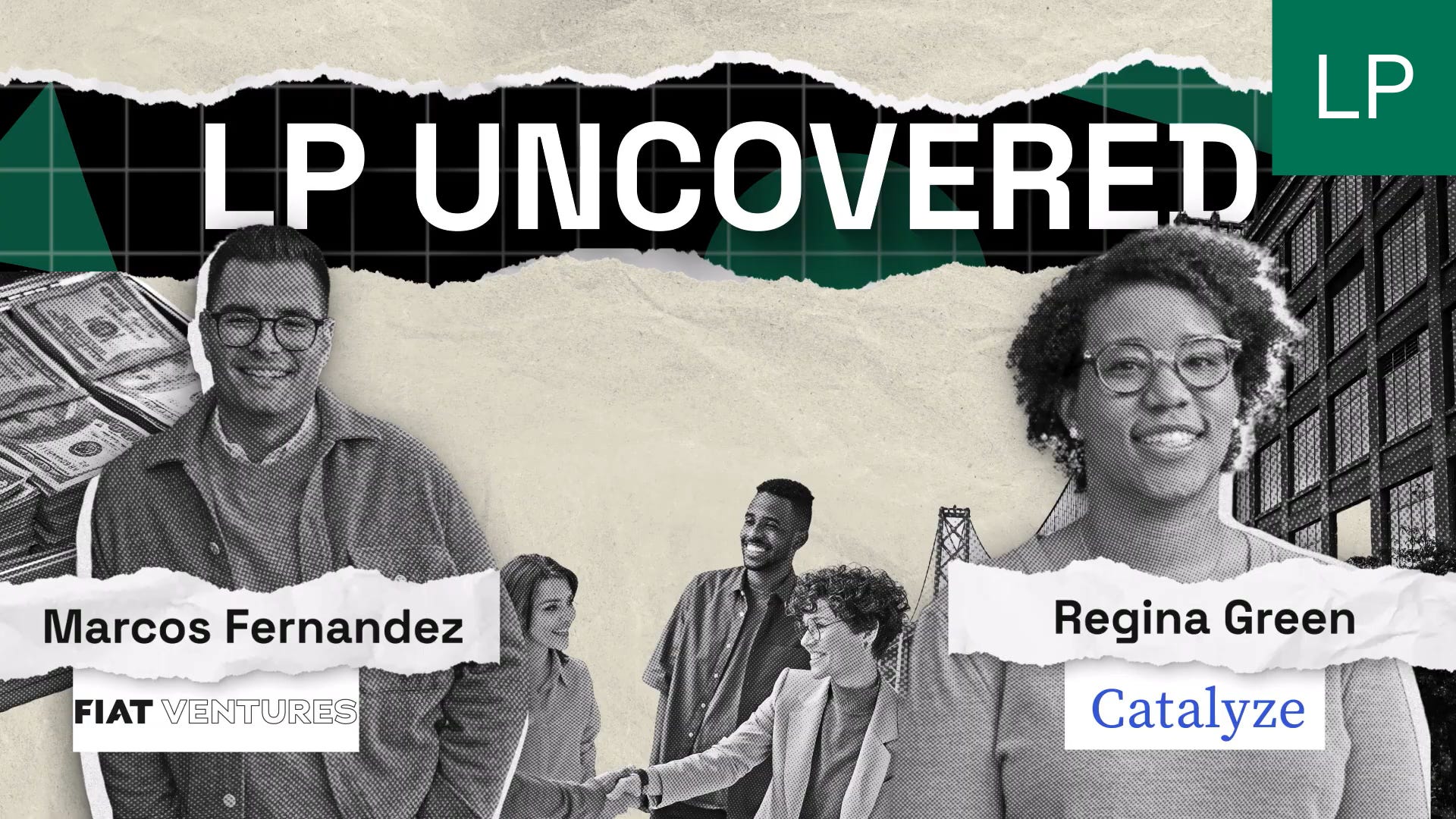
Regina Green shares her journey from her upbringing in Georgia to her extensive career at Goldman Sachs, where she navigated through various roles during tumultuous market conditions. She discusses the origins of Catalyze, a platform aimed at supporting underrepresented fund managers through their Fund Fellowship and the launch of GP Runway Fund, which provides non-dilutive capital to help them build sustainable firms. Regina emphasizes the importance of understanding the unique challenges faced by emerging managers and offers valuable insights for those looking to succeed in the finance industry.
Key Quotes
“My parents also instilled the value of education as the one thing no one can take away from you.”
“I now operate with the assumption that the person across the table sees the world differently, and I’m curious to learn what I can from them.”
“Lead with what makes you different. The thing that will win an LP over is your unique story and the thing that differentiates you from the pack. Lean into that.”
“I wanted to find a way to connect my passion for finance to something with a deeper purpose.”
About Catalyze
Founded in 2022, Catalyze is a national platform providing Capital Entrepreneurs — underrepresented and innovative investors – with the capital, capacity building, and community they need to build enduring firms. The company launched GP Runway Fund to provide flexible working capital loans to firms raising funds 1-3.
Catalyze offers firm-building support through its Fund Fellowship program, Capital Solutions to bridge financing gaps for GPs, and Investment Consulting Services for LPs backing the next generation of investment firms. They partner with Capital Entrepreneurs and Allocators across private markets to improve the flow of capital to overlooked businesses.
Who is Regina Green, and what shaped your early life and career?
A lot of my life’s context is built around this idea of being just a little bit different. I grew up in the suburbs of Atlanta, but my parents weren’t southerners. My dad is from Brooklyn, New York, and my mom is from a tiny town in Southern Illinois also coincidentally, named Brooklyn.
They were also a bit older than was typical for parents in the 80s, having been born in the 40s and 50s. They grew up in a very different cultural and legal world than I did. For example, my dad was recruited to IBM through a partnership with the National Urban League right after the Civil Rights Act passed. This history definitely informs how I think about diversity and inclusion today.
Both my parents worked at IBM for most of their careers, for 30 and 40 years, respectively. This idea of longevity at one institution was normal for me. When people are shocked I spent 17 years at Goldman Sachs, my reaction is, “I barely made it half as long as my parents!”
Between my parents’ backgrounds, their large families (my dad was one of nine, my mom one of seven), and me being an only child, I learned from a young age that people see the world through very different lenses. I hope this shaped a deep sense of curiosity and empathy. I now operate with the assumption that the person across the table sees the world differently, and I’m curious to learn what I can from them. This is vital in my work, where I’m evaluating potential fund managers. You’re investing in a “blind pool,” so you have to understand how their lived experience and unique perspective informs their investment thesis.
My parents also instilled the value of education as the one thing no one can take away from you. I ended up getting a scholarship to NYU, which wasn’t a long-held dream, but a last-minute decision. I think moving to New York without any preconceived notions helped me assimilate really well. I majored in Math and Economics, interned at Goldman Sachs, and fell in love with macroeconomics.
I started full-time in 2007 in sales and trading, which was a chaotic time to join Wall Street. My first couple of years were insane: watching competitors cease to exist was stressful, but it was also an incredible learning opportunity. It “leveled the playing field” because everyone, even senior folks, was coming in asking, “What’s the Fed going to do today?”
After that role shrank due to market changes, I moved to the Conflicts Resolution Group for 10 years. Our team was the traffic cop, reviewing every significant investment or advisory assignment to ensure the firm avoided conflicts of interest or reputational risk. It was a unique, high-level seat where I got to learn about every single business line at the bank.
You built your adult life in New York instead of returning South. What kept you there?
It’s true, a lot of my friends have moved back home. I always say New York is where I learned how to be an adult. You quickly learn you can only buy as many groceries as you can physically carry home!
But I love that it’s a surprisingly communal city. When you’re walking everywhere, taking public transportation, and spending time in places like Central Park, you feel a real sense of community. That feeling was amplified during COVID, seeing the city band together.
I’ve built deep roots here, including a strong church community. You need that sense of community, or the stress and energy of New York will overwhelm you. It’s also a place with unparalleled access to theater, entertainment, and, most importantly, a diversity of industries and perspectives. You can always pivot or learn something new here.
Plus, it’s a place people love to visit, and with three major airports, it’s easy to get anywhere.
What compelled you to pivot to Launch with GS during the 2020 pandemic?
In early 2020, I was the COO for the interest rate trading business. My job became figuring out how to keep our trading desk resilient during a global pandemic. It was one of the hardest seasons of my career, trying to solve an unprecedented problem: How does a trading floor, which relies on people yelling across the room, operate from home?
Once we settled into a remote-work steady state, I was watching the news, overwhelmed by the fact that people who looked like me were serving as essential workers, risking their lives, while I was safe at home.
It caused a lot of reflection. I love finance, but I felt the industry wasn’t serving people as broadly as it could. So many of my friends hate talking about it. I wanted to find a way to connect my passion for finance to something with a deeper purpose.
As I was exploring the venture and growth equity world, an internal role at Goldman’s Launch with GS initiative opened up. They had been focused on gender equity and were expanding to include founders and fund managers of color. In the interview, they told me, “This is a new thing. Nobody knows how to do it. We’re going to figure it out together.“
It wasn’t just an investing role; it was a chance to build an ecosystem and infrastructure from scratch. Goldman didn’t really have an emerging manager practice, so my job was to be a bridge between the bank’s massive platform and this new ecosystem we were trying to support. It appealed to the creative problem-solver in me.
What led you from Goldman to joining Catalyze?
At Goldman, we successfully executed on the firm’s $1 billion commitment over five years, and then the program was concluded. From everything I had learned, I knew the ecosystem still desperately needed support, particularly for emerging fund managers.
You can’t just decide to back diverse managers if you don’t also have an intentional way to incorporate new managers. It’s not like there’s a huge pool of underrepresented managers who have somehow already built institutional-quality firms while being underfunded. That infrastructure needs to be built, and that’s the gap I saw. I wanted to work with an organization tackling this challenge.
Why is it so much harder to underwrite an emerging manager versus an established firm?
Institutional allocators (like pension funds or banks) focus heavily on a repeatable track record. A first-time fund, by definition, doesn’t have that data.
But it goes beyond that. Allocators also have a fiduciary duty, so they need to see that you have the professional controls, processes, and service providers in place to handle their money. They’re asking, “Are my funds going into the right accounts? Are you complying with all regulations?”
All of that operational infrastructure—legal, compliance, fund administration—costs a lot of money and requires a meaningful team, which new managers just don’t have on day one.
How did you connect with the Catalyze team, and how are you helping emerging managers scale?
Historically, new venture managers would start with small “friends and family” funds, then raise from high-net-worth individuals, then family offices, and then finally graduate to institutions. That process, while slow, is important because it gives the manager time to learn and build their systems.
In 2020, many institutions wanted to short-circuit that process to improve representation, but they either struggled to find satisfactory managers or were trying to invest without all of the typical infrastructure being in place.
Catalyze was founded to provide that operational support and technical assistance. We’re not here to teach someone how to be a great investor; we’re here to bridge the information gap. We help talented managers avoid costly mistakes and build the firm infrastructure that institutional LPs (Limited Partners) actually care about.
I got connected to the Catalyze team (Maegan and Brendan) through two separate mutual friends around the same time. I joined as a consultant to help build out a new product, the GP Runway Fund.
We built it to solve the “chicken and the egg” problem: You need firm infrastructure to entice LPs. You need LP commitments to get management fees. You need management fees to pay for the infrastructure. Underrepresented managers who don’t have personal wealth or wealthy networks get stuck in this loop.
What exactly is the GP Runway Fund, and how is it different from a typical LP investment or a GP stake?
The GP Runway Fund is our first investment strategy. We provide flexible working capital loans, typically $100,000 to $500,000, directly to the manager’s management company.
Unlike an LP investment, which goes into the fund to make investments, this capital is to build the firm itself. The loans can be used for formation and growth expenses such as hiring, engaging service providers, and fundraising costs.
And critically, unlike GP staking, our capital is entirely non-dilutive. We are not taking any ownership in the firm or the GP (General Partner). We believe diluting a manager’s ownership is counterproductive to our mission of closing the wealth gaps and increasing access to capital in historically overlooked communities.
You mentioned GP staking. Why can that be detrimental to a new manager?
When you’re just starting, selling 20% or 30% of your management company for a check might seem cheap because the company isn’t worth much yet and you aren’t required to make cash payments early on.
The problem is, if you’re successful, if you go on to raise multiple funds and generate significant carry (investment profits), that 20-30% stake becomes massively expensive over the life of your firm.
More importantly, it can create incentive misalignment. An LP’s interests are aligned with the GP’s: make good investments, and everyone wins. The management fee isn’t what makes you wealthy; the carry is the real incentive. If you’ve given away a huge chunk of your firm and your carry, it impairs how much you’re tied to that investment performance, which can be a concern for future LPs.
What are the most common use cases for the GP Runway Fund?
We often say you need at least $150,000 just to get started. That’s just for legal counsel to draft the documents, to engage basic service providers, or travel to meet LPs, and it doesn’t include a salary for the GP.
For Fund 1 managers, the capital is used for those initial formation costs, hiring the first team members (like a platform or operations lead), and travel.
For Fund 2 and 3 managers, it’s often about scaling. They need to hire more people to manage a larger fund. They also need to invest in more robust, institutional-grade infrastructure, like cybersecurity and compliance, which LPs may ask to see before they commit capital.
We want managers to see this as strategic growth capital to invest in their firm’s execution capacity.
What’s one common mistake you see new managers make?
They don’t run their fundraising like a sales process.
There are many different types of allocators, and they all care about different things and invest at different stages. Too many managers approach their “later close” LPs (the big institutions) way too early, before they have the initial traction and capital raised that those LPs need to see.
You have to qualify your LPs and run a disciplined process, just like you’d advise your startups to do with their customers.
What’s a great tactic you wish more managers would use?
I recently saw a manager in our network bring a founder from one of their portfolio companies to an in-person LP meeting.
It was brilliant. It makes the GP’s strategy feel concrete and real. It’s also a creative and different way to provide an update. LPs are in meetings all day, and they told the manager, “A GP has never done this before.” It was memorable.
What’s your final piece of advice for fund managers?
Lead with what makes you different. Yes, there are basic, fundamental best practices you must have in place. But at the end of the day, the thing that will win an LP over is your unique story and the thing that differentiates you from the pack. Lean into that.
How can people learn more about Catalyze?
You can definitely reach out to me on LinkedIn.
You can also visit our website: catalyze.community. We have an inquiry form right on the site where GPs can express interest in the GP Runway Fund and learn more about the Fund Fellowship. We’re always happy to chat with GPs, even if it’s early in their fund-building journey.
More by Uncovered Media


