



In 2010, Katie Riester sat across from Aydin Senkut as he raised an early Felicis fund. This was a time when emerging venture firms were less common, and institutional LPs were largely focused on gaining access to established names. Aydin arrived with a physical spiral-bound pitch deck with an updated cover featuring the firms name, an act that showed he had considered the person sitting across from him before entering the room.
Katie still remembers the gesture.
Now, Katie watches for the same instinct when evaluating emerging managers. Too often, GPs get an LP meeting and rush into the story they have spent months preparing. They explain the strategy, the deals and why their fund deserves capital before learning much about the institution evaluating them.
“It’s okay to ask LPs these questions,” Katie said. “In fact, you should.”
What were the last few venture funds the LP backed?
What do they look for in a manager?
Who sits on the investment committee?
How does that committee make discussions?
Is the Institution even planning to add new venture relationships in the next six months?
The questions are practical. They can reveal whether an opportunity is actionable or a relationship needs more time. They also reject the operating principle that runs through Katie’s work at Felicis: When someone asks for information, access or another meeting, she wants to understand what they are actually trying to get.
What Are They Actually Asking For?
Katie learned to listen for the need underneath a request long before investor relations became her job.
After moving to California, she began volunteering with Safe & Sound, a San Francisco organization that operates a crisis line for parents and caregivers. She eventually spent more than 1,000 hours answering calls. Someone might be struggling with a child, a situation at home or emotions they were trying to manage differently. Katie learned to listen beyond the immediate problem and understand what the person needed from another adult in that moment.
Years later, she found herself applying a similar instinct to Felicis’ annual meeting.
Like most firms, Felicis spends months preparing for a relatively small number of hours. Founders present, the investment team shares its thinking, and a large amount of information is compressed into a single morning. Historically, the agenda would build toward lunch then end.
But Katie kept hearing that LPs wanted more time with the investment team. She did not interpret that as a request for another presentation.
Instead, Felicis divided attendees into groups of roughly 15 after lunch, split the investment team among them and ran three rotating ask-me-anything sessions. Katie worried the rooms might go quiet or that someone would ask a question the team had never addressed in that setting. Neither happened. LPs used the smaller rooms to push into substantive questions, with enough time to explore them rather than squeezing a microphone Q&A into the end of a crowded agenda. Another cocktail hour with games and pingpong gave people room to keep talking.
The prepared content had done its job. LPs wanted a different kind of access once it was over.
Let the Information Scale
Felicis produces plenty of information between those conversations. The firm publishes research and sector theses. Katie runs a semiannual webinar. The annual meeting remains a major touchpoint. One LP told her that following Felicis on LinkedIn gives him about 90% of the non-in-person information he needs.
Katie has also given LPs another option: ask the firm’s AI system directly.
The tool grew out of an internal product Felicis called Workbench, built using technology from portfolio company Tines. Team members could use it to pull information from Salesforce and financial data, asking why Felicis invested in a company or which rounds the firm participated in instead of searching across multiple systems.
Katie created a ring-fenced version for LPs.
She can see the kinds of questions they submit. About half are directly about Felicis, such as asking for the firm’s most recent investments. Others are so specific that Katie suspects LPs are using the system while preparing for meetings with other managers. They may ask about a particular company, financing or recent round.
She considers that useful too. If the tool makes an LP’s work easier, Felicis does not need to be the immediate beneficiary.
Katie wants to push the experiment further. She has been advocating internally for AI avatars of herself, Aydin, and potentially other team members that could answer commonly repeated LP questions. She imagines an allocator working on an investment memo and asking the virtual Katie how Felicis handles reserves. There is little reason the real Katie needs to join a meeting each time someone needs an established answer.
The more interesting use of her time begins after those questions are out of the way.
Leave Room for the Car Ride
About two years ago, Felicis began bringing a small group of LPs, founders, investors, and firm executives away together for what Katie calls retreats. A typical group might include five or six LPs, five or six founders, eight or nine investment team members and a few other executives.
Katie deliberately schedules no formal content. The group spends roughly two nights together somewhere away from the office, leaving the time largely open for conversation. At first, she was unsure whether senior professionals would see enough value in stepping away without a programmed agenda.
The result she remembers best happened almost accidentally.
After one retreat, an LP told her he had ended up in a car for about 45 minutes with two other allocators. During the ride, the three exchanged more informal references on managers than he believed he could have collected through weeks of scheduling individual calls.
The conversation worked because nobody had scheduled it.
The same pattern helps explain the small-group sessions at Felicis’ annual meeting. Once the prepared information was out of the way, people could spend time on questions that surfaced only through conversation. Katie increasingly wants technology to absorb more of the routine information without crowding out those moments, particularly in relationships that can last for decades.
What Happens After the Deal
Katie still occupies the LP seat through Felicis’ fund-to-funds program, which gives her a continuing view into how emerging managers think beyond the raise.
Finding and winning a deal gets most of the attention. It is competitive, visible and easy to celebrate. But Katie is more interested in what happens after the check is written.
Some managers describe themselves as deeply involved partners to founders. Others emphasize sourcing, access or the strength of their network. Katie listens for the operating detail underneath those claims. How is the portfolio constructed? How much capital is reserved? What happens in the next round? How does the manager protect ownership, and what role do they actually plan to play over the life of the investment?
Her version of the reserve question is broader: What is your portfolio construction?
It sounds basic. The answer often reveals whether a manager has built a fund or assembled a collection of exciting deals.
Katie does not need every manager to use the same model. A concentrated strategy can work. So can a manager who focuses almost entirely on sourcing and leaves little capital for follow-ons. What she wants is evidence that the trade-offs are deliberate.
An LP relationship can last two decades. The first meeting may be won through a strong story and a handful of promising investments. Katie is trying to understand whether the manager has built a system that can still make sense after the excitement of the first check wears off.
Felicis at a Glance
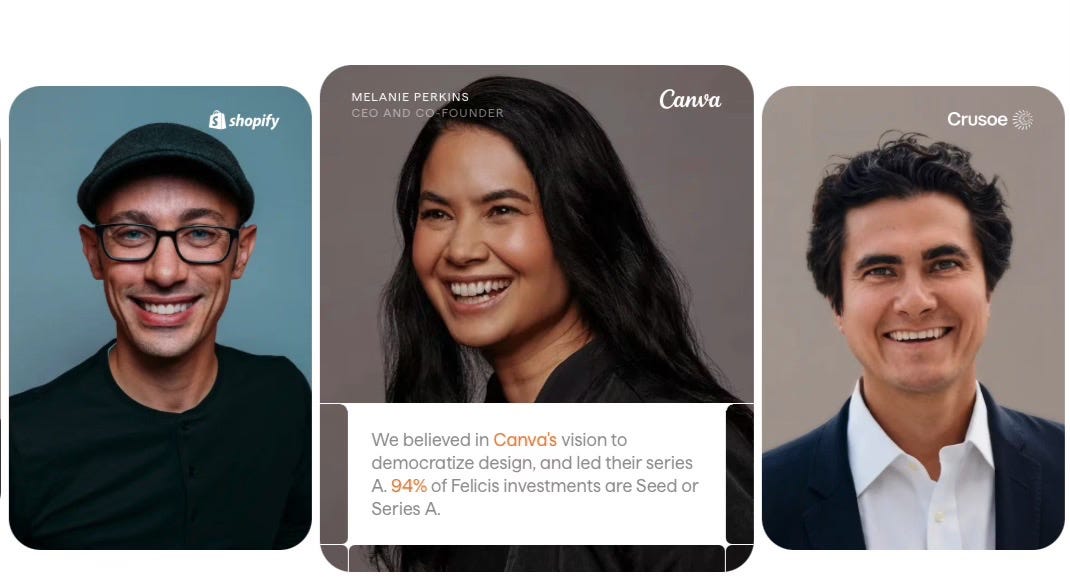
Current Fund: FV X: $900M fund; dedicated to early stage (seed, series A) investing
$4.1B AUM
Invested in 550+ companies
We’ve backed 60+ companies now valued at $1B+
IPOs across all funds: 19
Unicorn Exits: 27
140+ portfolio companies have been acquired or gone public
Our portfolio has captured more than $300B+ in market value
Total number of active portfolio companies: 260+
More from Uncovered Media


