



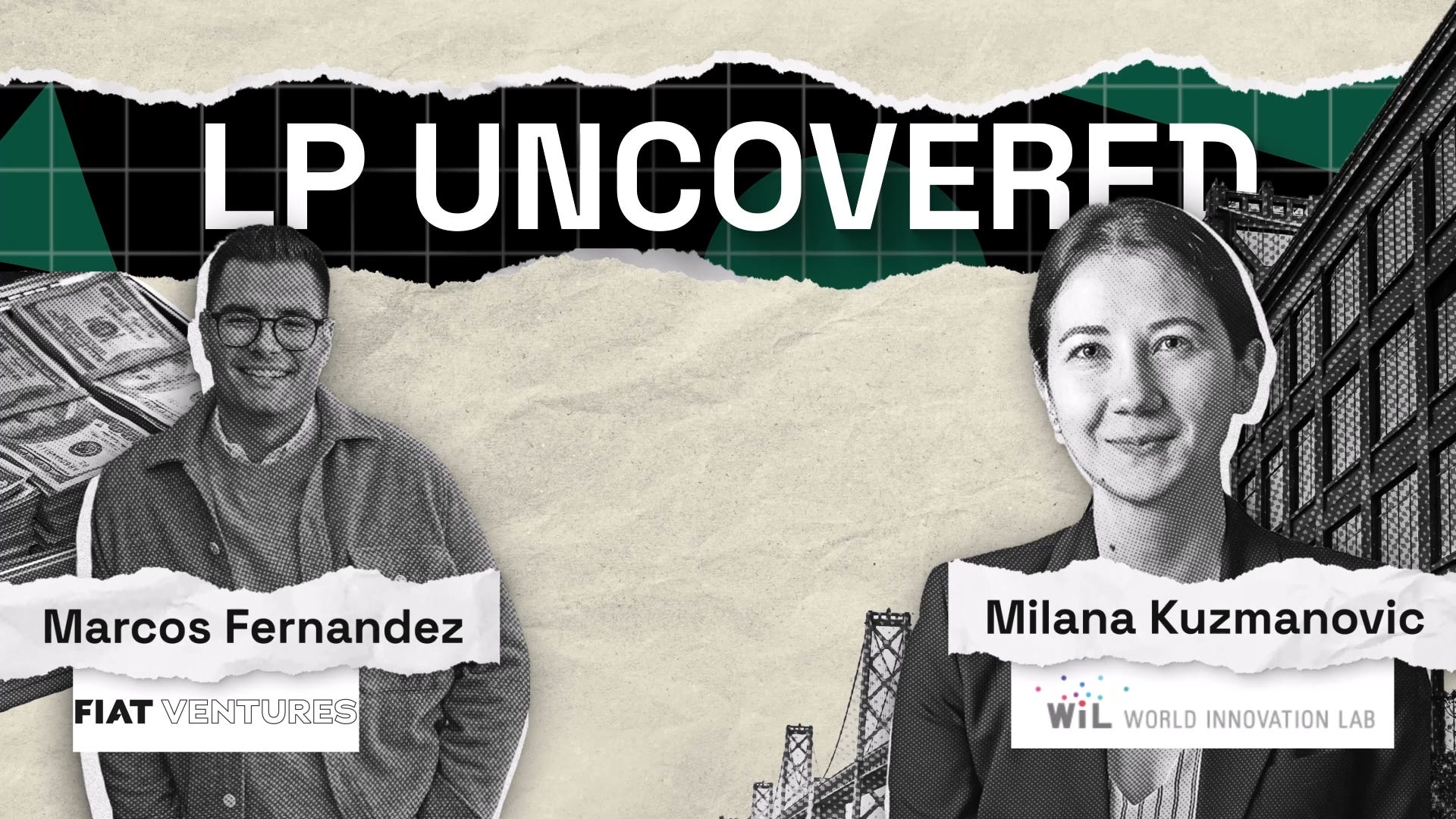
There is a particular kind of clarity that only comes from having lived through reconstruction. Milana Kuzmanovic grew up in post-war Bosnia and Herzegovina, a country remade by conflict and quietly rebuilt, in part, through the generosity of a nation on the other side of the world. Japan’s donations to Bosnia planted a question in a young Milana that she has spent her entire career trying to answer: Why? Why would a country with no obvious strategic interest invest in the recovery of a small Balkan nation?
That question, deceptively simple, became a compass. It led her from Banja Luka to Tokyo, from the trading floors of Citigroup Global Markets Japan to the ICD division of the International Monetary Fund, from the strategy rooms of McKinsey to the rolling hills of Silicon Valley, where she now sits as a partner at World Innovation Lab, better known as WiL. There, she is a part of the fund of funds platform, deploying capital on behalf of Japanese financial institutions and corporations that are, themselves, trying to answer their own version of the same question: How do we access innovation we cannot yet see?
The Fund That Knows What It Is
WiL did not begin as a fund of funds. It started, seven years before Milana joined, as a direct venture platform, backing promising startups and helping them expand into Japan. The thesis was straightforward: Silicon Valley produces innovation; Japan’s corporations need it. The matchmaking business was good. But something was missing from the broader picture.
“Japan as a whole is still missing access to venture capital as a real financial product,” Milana explains. The capital flowing through Japan’s venture ecosystem was, and remains, predominantly strategic, driven by corporate venture arms whose primary motivation is not financial return but industrial relevance. That is not a criticism. It is a structural observation. And it is precisely the gap that WiL Strategic Partners, WiL’s fund of funds strategy, was built to address.
The fund of funds sits alongside WiL’s direct investment arm, but operates with an important firewall. “On the fund of funds side, we are purely financially driven,” Milana says. There is no co-investment pressure, no quiet expectation that GPs will route deal flow back to the mothership. When collaboration happens organically, it is welcomed. But the mandate is clean. That clarity, she argues, is not just good ethics. It is good underwriting.
The LPs on the fund of funds side skew toward large Japanese financial institutions, pension-adjacent capital, and institutional investors seeking diversified exposure to US venture. They are not in it for the strategic trophy. They are in it for returns, for time diversification, and for access to an asset class their domestic market has not yet figured out how to produce on its own.
Zone of Genius, Not Zone of Aspiration
Milana has a term she reaches for when she talks about what separates the GPs she backs from the ones she passes on: zone of genius. Coined by author Gay Hendricks, it refers to the intersection of one's unique innate talent and the work that energizes one the most. Milana has brought it into her investment framework, and in that context it takes on a deceptively simple quality with rigorous implications. Your zone of genius is not what you want to be. It is what you already are, the intersection of your access, your judgment, your network, and your track record. The job of a GP, in her view, is to identify that zone with precision and build a fund sized exactly to operate within it.
The failure mode she sees most often is fund size drift masquerading as ambition. A boutique manager closes a $40 million fund, writes small checks, gets into good deals precisely because the check size is non-threatening to lead investors. The founders come back, grateful, and say they wish the fund could have led the next round. The GP internalizes that as a mandate to go bigger. “What they might not realize,” Milana says, “is that the reason why they might have gotten into some of the good deals is because their check size is small.” The moment the check size grows, the competitive dynamics shift. The GP is no longer a friendly co-investor; they are a lead contender, and suddenly the doors that were open begin to close.
“At what point does my investment strategy break?” That is the question she wants every GP to be able to answer before they sit across from her. Not what is my target return. Not how fast can I scale. The breaking point. The upper bound of the strategy’s integrity.
She is equally skeptical of the return theater that has become standard in GP presentations. “There’s so much pressure, especially on the boutique side, to come with, oh, my target return is 6x or 7x or 8x.” The inflated projection, she argues, is not just intellectually dishonest. It is counterproductive. “The more down to earth, the more realistic you are with your expectations, the easier it is for me to believe that you have a chance of outperforming it.” A GP who walks in and says “I am targeting 3x net as a baseline, and here is precisely how I plan to get there” is infinitely more credible than one who opens with eight times and a slide full of wishful math.
“I want to find a good GP, and I want to continue the relationship. It’s really hard to find, underwrite, and get access to a good GP, so once you find it, you kind of don’t want to lose it.”
The Marriage You Cannot Afford to Rush
Milana has a particular way of describing the LP-GP relationship that cuts through the transactional language that often dominates fundraising conversations. “If I’m going to commit to marrying you, I can’t just have one date.” It is not a casual metaphor. It is a structural truth about how she and her team approach the underwriting process, and it has direct implications for how GPs should be thinking about their own relationship-building timelines.
The fund of funds model, by its nature, demands longevity. When WiLSP commits to a GP, the goal is not a single fund. It is a multi-fund partnership, the kind of relationship that compounds in value as the LP builds institutional knowledge about a manager’s decision-making patterns, their response to adversity, and the accuracy of their self-assessment over time. “As a fund of funds VC, I want to stay with a GP,” she says. “Once you find a good one, you kind of don’t want to lose it.”
This is precisely why she pays such close attention to how GPs talk about the future of their own firms. A manager who presents a clear vision for how their firm will evolve, including how it will scale without drifting from its core strategy, is giving her the information she needs to model a long-term relationship. A manager who says “we’re $40 million now, but we’ll be $2 billion in five years” is actually signaling the opposite of ambition. They are signaling that their role in her portfolio is undefined and, therefore, potentially not a match.
The solo GP question is one she approaches with notable nuance. She does not have a categorical view against backing a single-partner firm. What she does have is a categorical view against adding a second partner simply to avoid that label. “If you have someone you’ve worked with very well, who can maybe challenge you, and at the same time you respect when they challenge you, that is going to improve your decision making. But if you are just bringing on someone who is kind of random, just so that you’re not a solo GP, I would rather you just be a solo GP.” The integrity of the decision-making process matters more to her than the optics of the org chart.
The Boring Stuff Is the Real Stuff
If there is one area where Milana believes GPs systematically underinvest, it is not in deal sourcing or portfolio support. It is in what she calls, without apology, the boring stuff.
“Please give me my financial statement on time,” she says. “Because then I will get in trouble with my accounting firm because I don’t have the data that I need.” The request sounds almost absurdly mundane. But behind it is a serious point about operational discipline and its relationship to trust. An LP who cannot get basic reporting on schedule begins to wonder what else is slipping. The fiduciary chain runs in both directions.
The same principle applies to LPA negotiations. Milana has noticed a recurring dynamic in which GPs interpret a request for protective covenants as a vote of no confidence. She finds this puzzling. “Me asking you to put a certain clause about a key person, about time devotion standard, it doesn’t mean that I don’t trust you. It doesn’t mean that I think you’re going to do something bad.” She draws the analogy directly from venture practice. A GP invests in founders they believe in and still insists on governance terms that protect the company from misalignment. The LPA negotiation is no different. It is not a referendum on character. It is the documentation of a serious, long-term financial relationship, and treating it as such is itself a green flag.
The DocSend problem belongs in this same category. “Make your decks and data room downloadable,” she says. “The links expire. It makes my hard job harder and it disincentivizes me from engaging in a relationship if I can’t even keep track.” For an allocator managing dozens of active manager relationships, the inability to download and reference materials offline is not a minor inconvenience. It is a friction point that signals, however unintentionally, that the GP has not thought carefully about the investor experience on the other side.
The Long View
Milana joined WiL in 2021, a vintage she references with a knowing tone. “Everyone was talking about, oh, I’ve never seen anything like this.” The deployment pace was relentless. Underwriting timelines compressed. Valuations stretched. And then 2022 arrived.
Now, she says, it is happening again. The artificial intelligence wave has generated a level of excitement that is compressing deployment cycles across the venture market, from pre-seed boutiques to multi-stage blue chip funds. She understands the pull. The opportunity set is genuinely extraordinary. Companies are scaling to $50 million, $100 million, $200 million in revenue faster than any prior generation of software companies. The winners are moving quickly and the pressure to commit before someone else does is real.
But she is watching the clock. “If you are deploying all of your capital within a year to year and a half, you’re not getting a lot of time diversification.” And with any major technological transition, she notes, the early landscape is populated by both early winners and a larger number of eventual losers. The managers who pace themselves, who preserve capital for the companies that will crystallize later in the cycle, are the ones whose portfolio construction will hold up when the narrative shifts again.
Her message to established managers carries an extra edge. “If you’re an established manager, you should know better.” A first or second fund GP can be forgiven for not having lived through a full cycle. But a firm with decades of institutional memory deploying a fund in 18 months in a frothy market is not making a first-time mistake. It is making a choice. And that choice will invite a lot of questions when the next fundraise comes around.
Speaking of fundraising, she believes that GPs do have a choice of who they want their LP to be. “Do you just need capital? Then you want someone who will give you the capital and go away,” she says about GPs choosing their own LPs. “But do you need someone to push you on your thinking? Do you need someone who will be involved and an advisor, someone who will be that first call for you?” The relationship, at its best, is not transactional. It is iterative, honest, and built for the long duration that venture capital actually demands.
Milana closes conversations about the industry the same way she approaches everything else: with a directness that is both generous and unambiguous. “Not every LP will be fit for your strategy,” she says. “And that’s okay. You just do you.” In an ecosystem that rewards certainty of vision and punishes imitation, it is advice worth sitting with. Find the zone of genius. Build toward it. And find the partners who can see what you are actually building, not just what you project on a slide.
More from Uncovered Media


